


According to UNICEF, up to five million children and adolescents worldwide grow up outside their families, often in residential care, group homes, or foster families. But what happens when these young people reach adulthood? What opportunities and support are available to them as they begin to navigate life on their own?
In Peru, the challenges can be particularly severe. Violence, urban crime, sexual exploitation linked to human trafficking, homelessness, and corruption are part of everyday reality for many people. Children and adolescents who have experienced violence or neglect within their families often grow up in residential care. Young people leaving juvenile detention can face an equally difficult transition, frequently finding themselves without family support or assistance from the state. In many cases, they are expected to become completely independent almost overnight. The term “care leavers” describes young adults who have grown up in residential child and youth care and are now making the transition to independent living.
Since its foundation, Asociación Runayay has supported 260 care leavers in navigating this transition. The organization not only provides individual support but also helps young people understand and exercise their rights. In addition, Runayay offers training and professional guidance to staff working in residential care facilities, juvenile detention centers, and government institutions.
It was through this work that Runayay reached out to the Emergency Pedagogy team of Friends of Waldorf Education. Many professionals working with children and young people have had little opportunity to develop a basic understanding of trauma-sensitive practice or learn approaches to emotional stabilization. Runayay also sees training and awareness-raising as an opportunity to help bring about change within the system itself, strengthening professionals and creating approaches that can be shared and multiplied across different institutions.
Building knowledge and strengthening practice
In July 2026, Runayay and the Emergency Pedagogy team of Friends of Waldorf Education jointly organized a seminar entitled “Psychosocial Trauma in Childhood and Adolescence – Foundations for Trauma-Sensitive Practice in Residential Care and Juvenile Detention.”
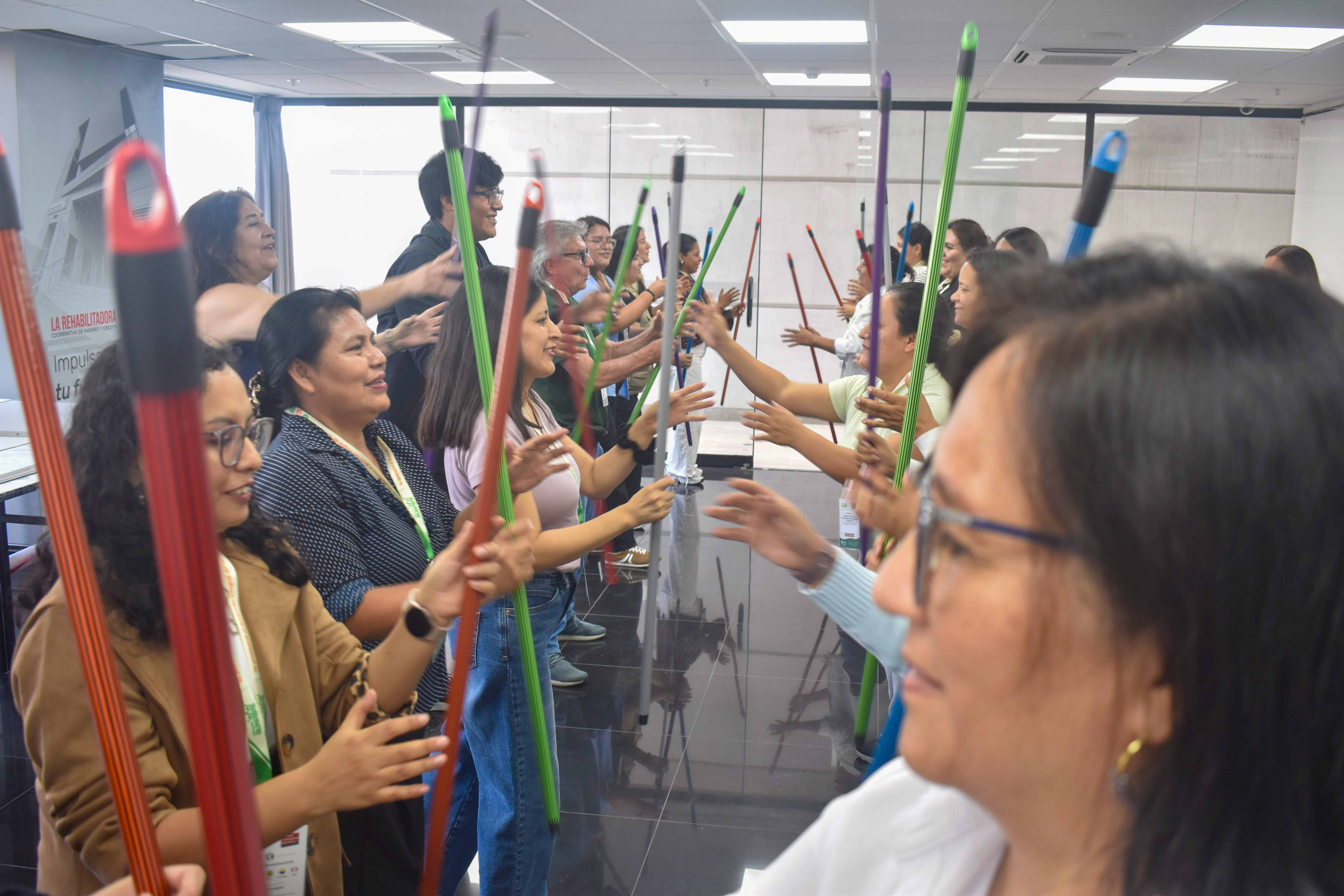
Around 65 professionals participated. They came from residential care facilities, organizations supporting survivors of sexual violence and exploitation, government institutions comparable to youth welfare services, juvenile detention centers, and NGOs working with care leavers. The seminar was facilitated by an international Emergency Pedagogy team from Germany, Colombia, Argentina, and Brazil. The response was highly positive.
“These were very valuable activities. They helped me connect more deeply with myself—and, based on that, to connect more deeply with the children and young people I work with.”
For the professionals, the training was not simply about acquiring theoretical knowledge. It also created space for self-reflection and for exploring how their own inner state can influence their relationships with the young people in their care.
A space to pause, reflect, and connect
After the professional training, the Emergency Pedagogy team held a two-day workshop together with care leavers outside Lima. The young participants gathered at a Casa de Retiro, a peaceful retreat surrounded by greenery around 25 kilometers from the bustling capital. Away from the demands of everyday life, they had the opportunity to slow down, exchange experiences, reflect, and simply spend time together. And despite the difficult subjects they explored, there was plenty of laughter.
“I believe that this weekend helped many of us to relax, clear our minds, and understand ourselves better,” said José, a care leaver from the Runayay project.
The workshop began with an introduction to trauma and its effects. The participants’ feedback showed how closely the topic was connected to their own experiences. Many were particularly interested in questions of healing and in finding ways to live with the consequences of psychosocial trauma. The sessions focused on practical strategies and possibilities for coping with difficult experiences, while also exploring personal resources and sources of hope. The aim was not to offer simple solutions, but to create a space in which participants could better understand themselves and discover resources that can support them in their everyday lives.
From theory to everyday practice
The final part of the week focused on intensive work with the Runayay team. Together, the participants explored the foundations of psychotraumatology and trauma-sensitive educational approaches from an anthroposophical perspective. They also worked on Runayay’s own trauma-sensitive approach, discussing concrete situations from everyday practice and considering how theoretical insights could be translated into practical support for young people.
Creative and experiential methods played an important role. Through workshops involving art, movement, rhythm, and experiential education, the Runayay team was able to explore these approaches from their own perspective. Self-care was another important theme: supporting others effectively also requires professionals to pay attention to their own well-being and resources.
Looking ahead
The intensive week provided an important foundation for Runayay’s ongoing work with young people who have found a second home within the organization. By strengthening trauma-sensitive practice, the aim is to accompany care leavers more effectively as they build independent lives, often in circumstances marked by considerable uncertainty and crisis. At the same time, the training represents a broader step towards strengthening trauma-sensitive approaches within Peru’s child and youth care system. Runayay works closely with numerous residential care facilities and government institutions and hopes to share the knowledge and approaches developed through this work with these partners.
There is also growing interest from juvenile detention centers, several of which have already approached Runayay with requests for workshops and further training.
The week in Peru therefore reached far beyond a single seminar or workshop. It was about creating spaces for reflection, strengthening professional practice, and helping young people and those who support them to better understand themselves—and, from there, to build more supportive relationships and new perspectives for the future.
Verena Böhling
This project is made possible thanks to financial support from Aktion Deutschland Hilft. If you like what we do at the Department of Emergency Pedagogy and would like to support our work, please click here: Help now