


It quickly became clear that, despite international aid efforts, there is a dire lack of shelter, food, and healthcare. Psychosocial support is also largely absent. Many of the people we met had experienced displacement, violence, and flight due to the war – and now also suffer from the consequences of the earthquake. All of this results in a heavy psychological burden for a large portion of the population in Myanmar.
What moved us most was the solidarity among the people: whenever there is time or financial capacity, people stand by one another and try to help each other despite the many hardships. One example of this is John. He and his wife have taken in twenty orphaned children. First, they had to flee the war, and now they are also affected by the earthquake, leaving them with barely any resources. The children begged John to let them stay, even if it meant having less food. So now, this large family gets by with just two meals a day.
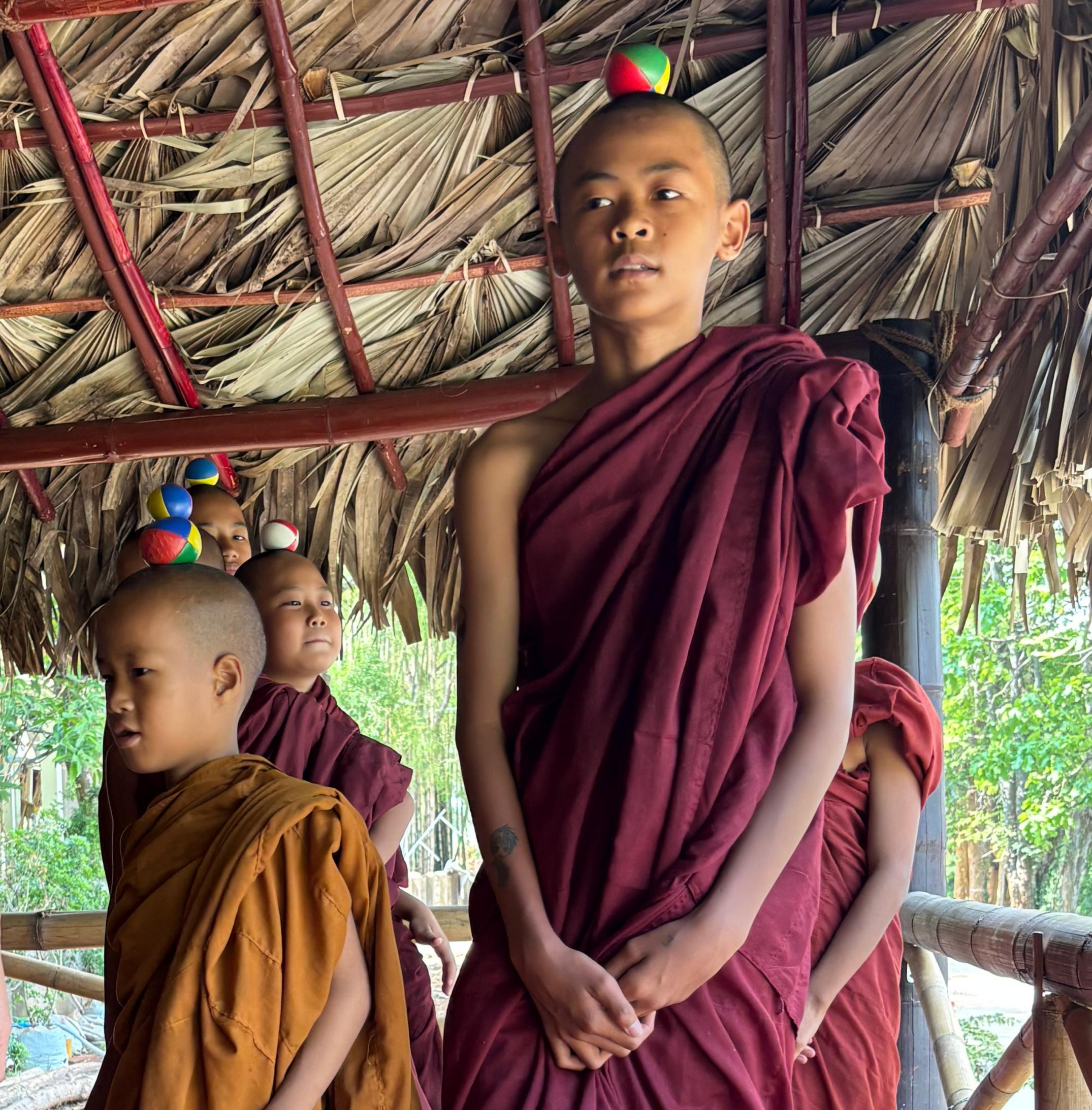
We spent two days working with these children – and were amazed at how quick to learn and physically capable they were. Rarely do we see children so skilled with balls or sticks, for example. We were also deeply impressed by their social interactions and sense of community.
Later in our trip, we met with two Waldorf teachers from the war-torn Shan State to discuss possibilities for support in areas where foreign aid workers are not allowed to enter due to the ongoing conflict. The two colleagues plan to set up a Child Friendly Space for children and youth in their home village. We will do our best to support them over the coming months via online meetings.
Kham Yein, one of the teachers, told us about the past few years. She fled from place to place for weeks, as her area is plagued by violence and drug activity. She also shared her concerns about children in internet-accessible areas who spend the entire day on their phones consuming inappropriate content. And about children whose parents push them hard in the hope of giving them better opportunities: some are sent to Chinese lessons at 5 a.m., followed by a full school day and another Chinese lesson in the evening. She also spoke of the growing financial worries caused by war and the earthquake.
Kham Yein often hears from parents that they have no capacity left for anything because the only question that matters is: How will we get something to eat today? After the conversation, Kham Yein thanked us for listening to her story and said: “Do you know what I learn here? Not to think about yesterday or tomorrow, but to be grateful for what I have today.”
At the end of our trip, we arrived in Taunggyi, where 30 educators were already waiting for us. They too had fled the war and were later affected by the earthquake. Now they live in camps near Taunggyi. We were able to work with them for two days. One of the main topics was "trauma – what exactly does that mean?" We played games together and engaged in artistic activities. Despite all the heaviness and individual burdens, moments of joy and lightness emerged. One teacher said: “When we play these games, I feel like a child again – I had long forgotten that feeling.” It was hard to say goodbye. They asked us to come again – but next time, to stay longer!
Helping directly in Myanmar is not always easy – there are many obstacles, especially due to the war. But with the help of our local colleagues and the strong mutual support among the people, we were able to make a first contribution, and we will continue to support wherever and however we can.
Fiona Bay
This work is financially possible thanks especially to the support of donors and Aktion Deutschland Hilft.