


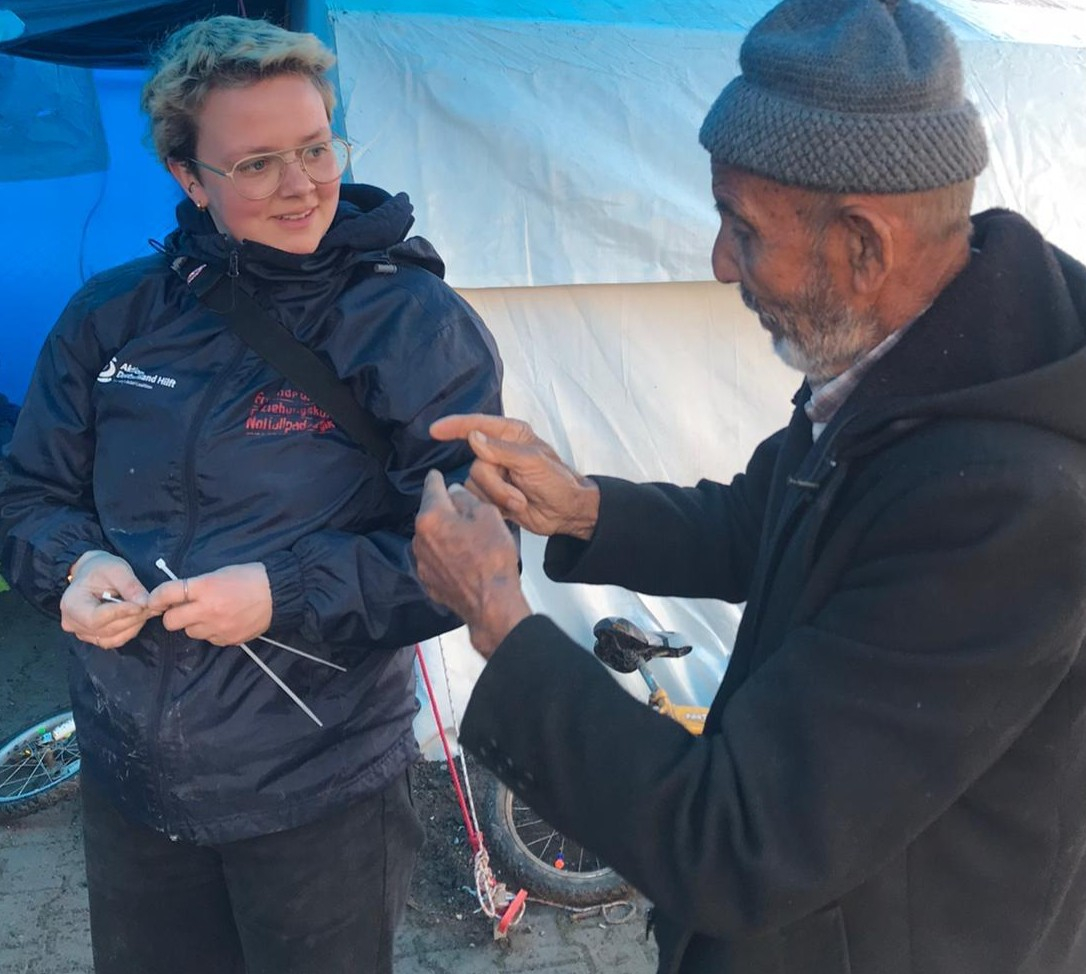
For me, Lebanon was the first country where I experienced emergency pedagogy in practice. In 2021, as part of my bachelor's degree, I completed a six-month internship in the Emergency Pedagogy department in Karlsruhe. At the end of the internship, I was able to accompany an emergency pedagogical team to Beirut and assist with coordination. The mission was initiated as part of the effort to help families affected by the explosion in the port. The COVID-19 pandemic and the associated restrictions were also very much present at the time. Today, I know how much more the people of Lebanon had to endure and still have to endure in the years that followed.
After completing the internship, I began my master's degree in Conflict and Peace Studies. The aspect of psychosocial health, especially in (post-)war contexts and in the peace process, never left me. The internship sparked my interest in exploring the role of emergency pedagogy in a scientific context. Lebanon, with its diverse history, both in terms of emergency pedagogy and the various conflicts and disasters experienced there, was a suitable context for my research.
When discussing the impact of psychosocial support, such as emergency and trauma pedagogy, on children and their families, the role of children as active agents in peacebuilding often goes unmentioned. Exactly this I wanted to change with my research.
I gained access to my research group, and thus fundamental insights into the work on site, through a collaboration with the Lebanese organization Just.Childhood. The Emergency Pedagogy department at Friends of Waldorf Education and Just.Childhood have been collaborating for over five years. In 2022, the organization began establishing two child-friendly spaces where children regularly receive emergency and trauma pedagogical support. The artistic activities are offered, plays are developed together, and especially for younger children, free play plays an important role. The local pedagogues received further training in emergency and trauma pedagogy through an eight-module training program. They can apply what they have learned directly in their work with the children and continuously develop their skills further.
As part of the data collection for my master's thesis, I conducted several detailed interviews with the local pedagogues. I also had almost a hundred questionnaires filled out by parents and caregivers whose children were enrolled in Just.Childhood's programmes.
When evaluating and analysing the data, it quickly became clear how wide-ranging to some extent traumatic experiences of children, but also of adults, are in Lebanon. My respondents often cited the Covid-19 pandemic and the associated lockdown as one of the main stress factors for the children. The months of isolation combined with financial constraints posed major challenges for many families. They also often mentioned the port explosion in August 2020 and the impact of the Israel-Palestine conflict on the Lebanese population. In addition, most families have a refugee background and have either fled to Lebanon from Palestine in the second generation or from Syria in the first generation.
A very impressive result of my research was that children passively and actively carry the positive experiences from the emergency pedagogical activities in the child-friendly spaces into their families and thus contribute to the stabilization of their environment. The children behaved less aggressively at home and communication within the families improved. For example, one mother described that her son actively encourages conversations about his own well-being in the family environment and thus improves open communication in the family. Another caregiver said that she can now finally let her three children play alone because the children play more friendly and calmly with each other, share things and are more in touch with each other. Feedback about improved sleep, both among children and other members of the household, was also described as a positive outcome of the emergency pedagogical activities.
Research and thorough data analysis are important and beneficial tools for better anchoring the work of emergency pedagogy in the context of “peace”. The work with children in Lebanon as well as the conflicts in the region continue and so our department continues to develop ideas to take a look at the topic from a scientific perspective.
Lina Bäuerle