


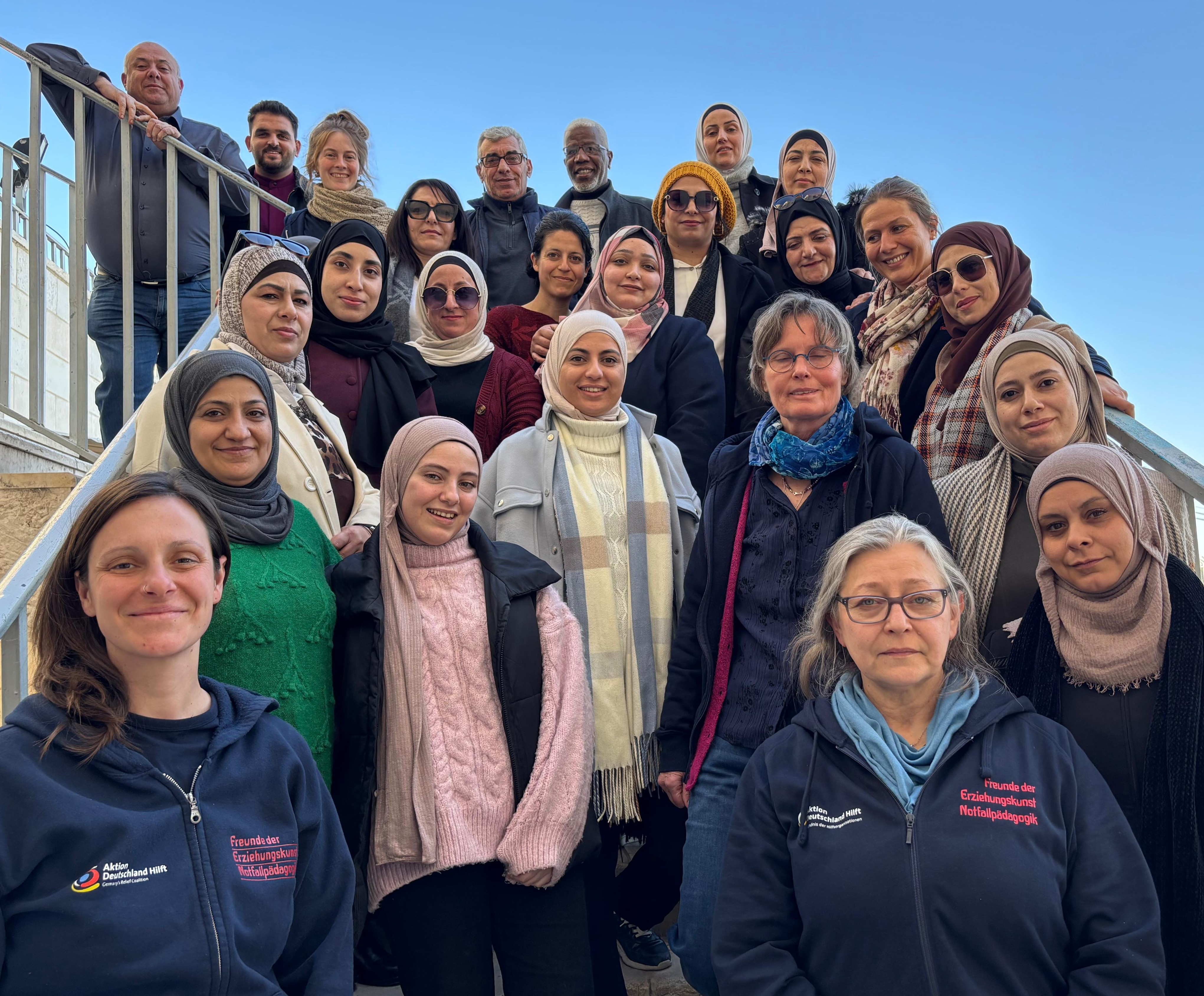
At the end of the first visit last year, the teachers expressed a strong desire for the Trauma and Emergency Pedagogy team to return and continue working with the educators. We were able to fulfill this promise and were in Bethlehem from January 27 to 31. Unfortunately, our journey was also fraught with obstacles due to hours of waiting at the checkpoint. Teachers from a school in Hebron could not participate, as traveling between cities has become unpredictable, often involving hours of waiting at checkpoints.
At the beginning of the training, a teacher named Khaled asked, "How can we give when we have nothing left?" He and other educators spoke of their feelings of hopelessness, the sense of no longer being free, and their ongoing fears. Many reported developing sleep and eating disorders, while others spoke of depression and anxiety attacks. But where can they find the strength to provide security for the children and meet them with trauma-sensitive care?
Over the next days, the focus was on deepening Trauma and Emergency Pedagogy methods with the educators — through theoretical insights into psychotraumatology and pedagogy, as well as workshops in art, movement, and age-appropriate games. The teachers had already received an introduction to these approaches in September and were familiar with the concepts.
The days were marked by a mix of joy, seriousness, and also sadness. Ala, who has been teaching at the school for twelve years, shared on the last day how she had learned over the years to smile even when she didn’t feel like it. But this time, she said she truly felt joy from within. She was eager to apply the many ideas she had gained from the movement and art workshops directly with the children. She felt newly energized to support students who often struggle with concentration and are perceived as hyperactive by their other teachers.
Khaled, too, now feels that he has something to give to the children again. When asked about their hopes for the future, the teachers expressed a desire for further training sessions—preferably longer ones. They also wished for educators from other schools to be invited so they could share the empowering experiences they had gained.
The work in the West Bank is made possible through the support of Aktion Deutschland Hilft.
Fiona Bay